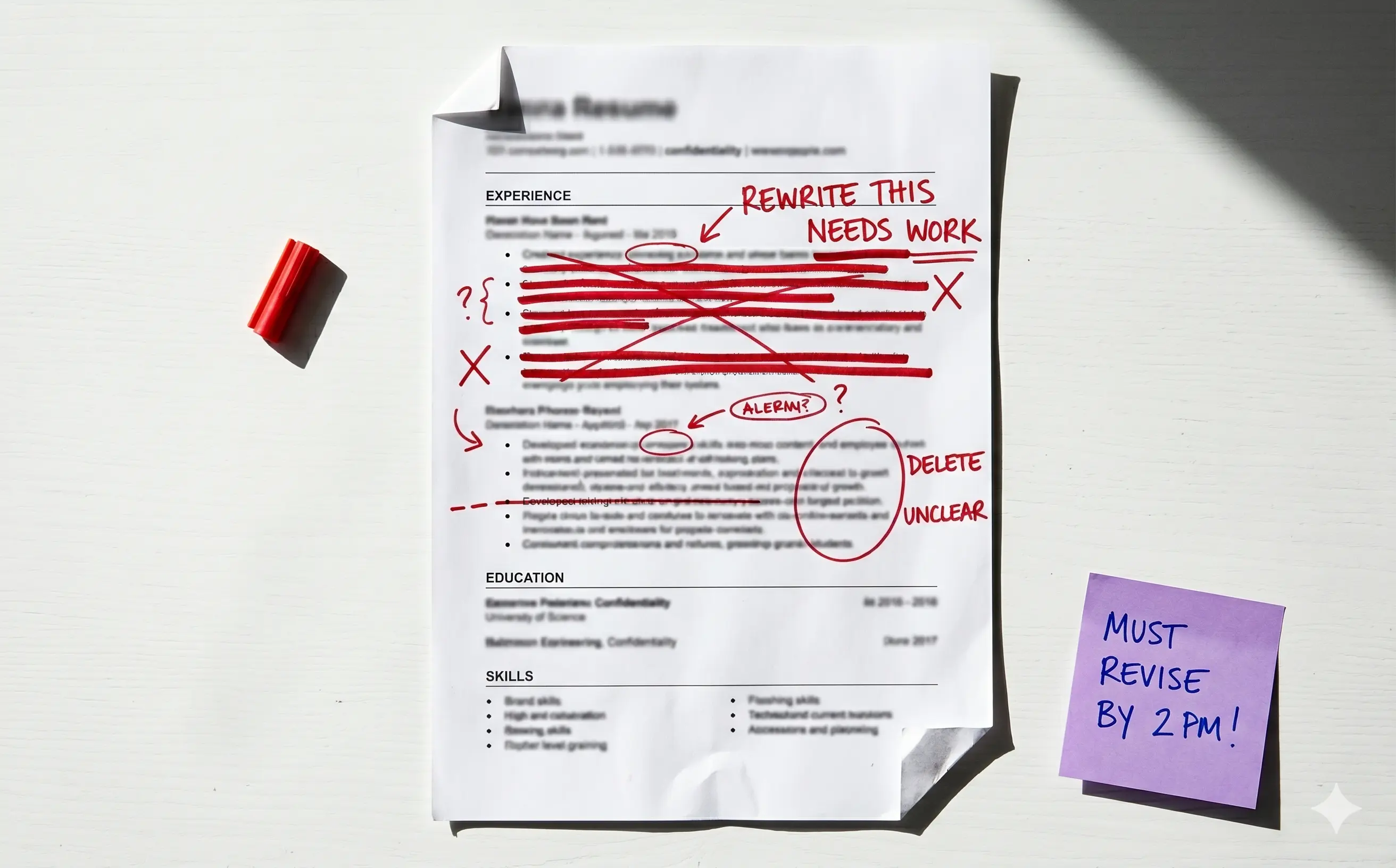
How to Write Strong Resume Bullets When You Have Limited Experience
A practical guide for students and early-career candidates who need sharper resume bullets, stronger proof, and more interview-ready impact statements.
Like this article? Join the weekly newsletter.
Create a free account for weekly resume, interview, and outreach tactics from the same content engine.
If you are a student, a new grad, or a career switcher, the hardest part of resume writing is usually not formatting. It is turning ordinary work into clear evidence that you can solve problems.
That is where strong resume bullets matter. A good bullet does three things fast:
- names what you worked on
- shows what you changed
- gives the reader a reason to trust the result
Start with outcomes, not duties
Weak bullets usually sound like job descriptions:
- Responsible for social media
- Helped with event planning
- Assisted the sales team
Those lines tell the reader what your team did, but not what you specifically improved. Rewrite them around outcomes:
- Grew Instagram engagement by 34 percent by shipping a weekly student-focused content calendar
- Coordinated a 120-person campus event and reduced no-show rates with reminder emails and tighter RSVP follow-up
- Built a lead tracker that helped the team follow up on 80+ prospects without losing context
Use this simple formula
When you get stuck, draft bullets in this order:
- Action you took
- Scope of the work
- Result or proof
Example:
Built a spreadsheet to track applicant outreach across 3 student clubs, cutting duplicate follow-ups and improving response visibility for the committee.
If you have numbers, use them. If you do not, use scope, frequency, or quality improvements.
Translate student work into professional language
Early-career candidates often hide their best evidence because it came from school, clubs, freelance work, or side projects. Recruiters still care if the work shows initiative and execution.
You can describe:
- class projects with measurable results
- volunteer leadership
- part-time job improvements
- club operations and events
- portfolio or product launches
The key is to frame them like work, not like filler.
Match bullets to the target role
A resume bullet that helps with a marketing role may not help with an operations or software role. Before you edit, scan the job description for repeated themes:
- communication
- analysis
- ownership
- tools
- metrics
- collaboration
Then move your strongest matching bullets higher up the page.
If you want a faster workflow, the resume builder demo is a good benchmark for how to shape bullet points around a specific role instead of sending the same generic draft everywhere.
Proofread for compression
Good bullets are dense, not long. Trim phrases like:
- responsible for
- worked on
- helped with
- involved in
Replace them with stronger verbs:
- built
- launched
- analyzed
- coordinated
- improved
- automated
Final checklist
Before you ship your resume, make sure each bullet answers at least one of these questions:
- What changed because of this work?
- How big was the project or responsibility?
- Why should a recruiter care?
Strong bullets make the rest of your resume easier to trust. If the page still feels vague, rewrite the bullets before you rewrite the design.