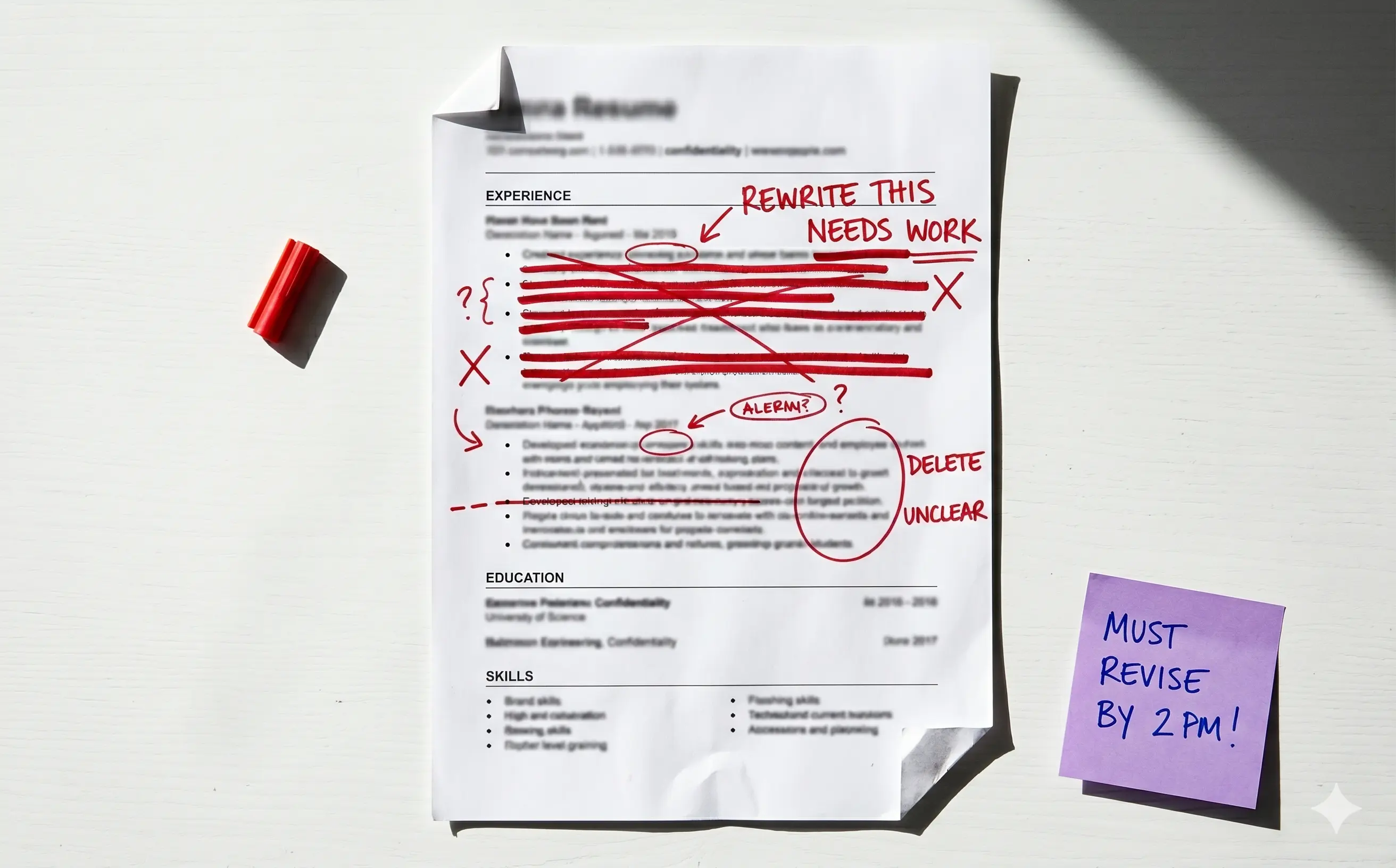
How AI Is Changing Job Applications and What Candidates Should Do Next
AI now shapes resume screening, outreach, interview prep, and application quality. Here is what job seekers need to understand to stay competitive.

Like this article? Join the weekly newsletter.
Create a free account for weekly resume, interview, and outreach tactics from the same content engine.
AI is no longer a side topic in hiring. It is part of how job descriptions are written, how resumes are screened, how outreach is prioritized, and how candidates prepare.
That changes the job search in two important ways:
- more of the funnel is evaluated before a recruiter talks to you
- candidates who work with the system usually move faster than candidates who ignore it
Resume screening is more structured than ever
Most applicants first meet an applicant tracking system, not a recruiter. That does not mean you need to write for robots only. It does mean your resume needs to be easy to parse and relevant to the role.
Focus on:
- standard headings like Experience, Education, and Skills
- language that reflects the job description
- concise bullets with clear outcomes
Fancy layouts can still look good, but if they hide the evidence or break parsing, they cost you reach.
Job matching is getting more contextual
Hiring teams increasingly score candidates on fit, not just on exact title matches. That means your application materials should show adjacent skills and business context, not only tool lists.
For example:
- a support role can prove product thinking
- a student club can prove operations and stakeholder management
- a class project can prove analysis and ownership
AI systems often surface these patterns faster when the evidence is explicit.
Candidate tooling is improving too
This is the other half of the story. Candidates now have better ways to:
- tailor resumes faster
- organize outreach
- practice interview answers
- track applications without losing momentum
The competitive edge is not "using AI" in the abstract. It is using it to remove repetitive work while keeping your judgment on positioning, tone, and priorities.
If you want to see how this plays out in practice, the job opportunities demo and resume builder demo show the type of workflow that turns AI into execution instead of noise.
Interview prep is becoming more data-driven
Candidates used to rely on generic lists of interview questions. Now you can simulate role-specific practice, tighten story structure, and catch weak answers before the real interview.
That matters because strong candidates often lose not on skill, but on delivery:
- answers are too long
- examples are vague
- impact is unclear
- follow-up questions expose missing detail
The more structured your preparation, the more confident you sound under pressure.
What to do now
Do not treat AI as a shortcut that replaces thinking. Treat it like leverage:
- Use it to speed up repetitive editing
- Keep your own judgment on what to emphasize
- Review every output for accuracy and tone
- Build a repeatable workflow instead of one-off hacks
The candidates who win in this market are usually the ones who can move fast without sounding generic.